Pane di Altamura: from a grain of wheat to a slice of bread
Article continuously updated
Last updated:
This article grows along with my research into Pane di Altamura. I will keep updating it with new sources, testimonies, processes, images, videos and bakeries as I visit them and get to know them directly.
I am from Altamura, and I think I have been hearing people talk about our bread all my life.
The best bread in the world. Bread that lasts a week. Durum wheat bread. Wood-fired bread. Horace's bread. PDO bread. Bread tourists come here specifically to buy, perhaps together with focaccia, taralli and everything else they can fit into the boot before heading home.
The paradox is that a product can be extremely famous and, at the same time, far less understood than we think.
Because there is a lot of ground between knowing that Pane di Altamura exists and knowing what makes it Pane di Altamura. In that space there are wheat fields, different varieties, harvests that change from year to year, mills, remilled semolina, sourdough, hands, time, ovens, crusts, crumbs, families, duties, shepherds, bakers, European rules and even a few stories that, repeated often enough, have ended up sounding more precise than they really are.
This article exists to put those pieces together.
Not to decide which bakery is the best in town. Not to prove that Pane di Altamura is superior to every other bread. And not even to defend it.
I simply want to follow it from the beginning.
From a grain of wheat to a slice of bread.
And the first thing to clarify is also the one that causes the most confusion.
01 PDO and non-PDO
What is Pane di Altamura?
Pane di Altamura PDO — DOP in Italian — is a bread made from remilled durum wheat semolina, sourdough starter or natural leaven, water and sea salt, produced within a defined supply chain and according to a specification that establishes the origin of the raw material, the production method and the characteristics of the finished product.
But a great deal of other bread is made in Altamura too.
It sounds obvious, yet this is exactly where we need to start.
Pane di Altamura PDO
Protected designation, supply chain and specification.
Bread made in Altamura
Bread made in the city, possibly excellent, but not necessarily PDO.
The distinction does not mean good/bad.
Pane di Altamura PDO and bread made in Altamura are not the same thing
If you walk into a bakery in Altamura and buy a loaf, you have not automatically bought Pane di Altamura PDO.
You have bought bread made in Altamura.
It may be made with durum wheat semolina. It may use sourdough. It may be baked in an old oven. It may be magnificent. In shape or flavour, it may even resemble what we collectively imagine when we say Pane di Altamura.
But PDO is something else.
The Protected Designation of Origin links the name to a precise system: territory, raw material, supply-chain operators, production method, controls and final characteristics. To sell a product as Pane di Altamura PDO, being in Altamura is not enough, and neither is following a similar recipe.
This distinction matters for another reason too: PDO and non-PDO do not mean good and bad.
PDO answers, first and foremost, this question: does this product belong to the designation and comply with the required conditions?
Taste answers a different question.
I may like a Pane di Altamura PDO very much or very little. A bread made in Altamura outside the PDO system may be technically excellent or mediocre. Confusing certification with gastronomic judgement helps neither the consumer nor the people who make the bread.
The opposite is also true. If a baker chooses different flours, a different fermentation process or a shape outside the specification, they are not making a “wrong” version of Pane di Altamura PDO. They are making another bread.
And in my view, this plurality is precisely what makes Altamura more interesting than a gastronomic postcard.

02 The territory
Before the bread comes the Murgia
Pane di Altamura does not begin inside an oven. It begins much earlier.
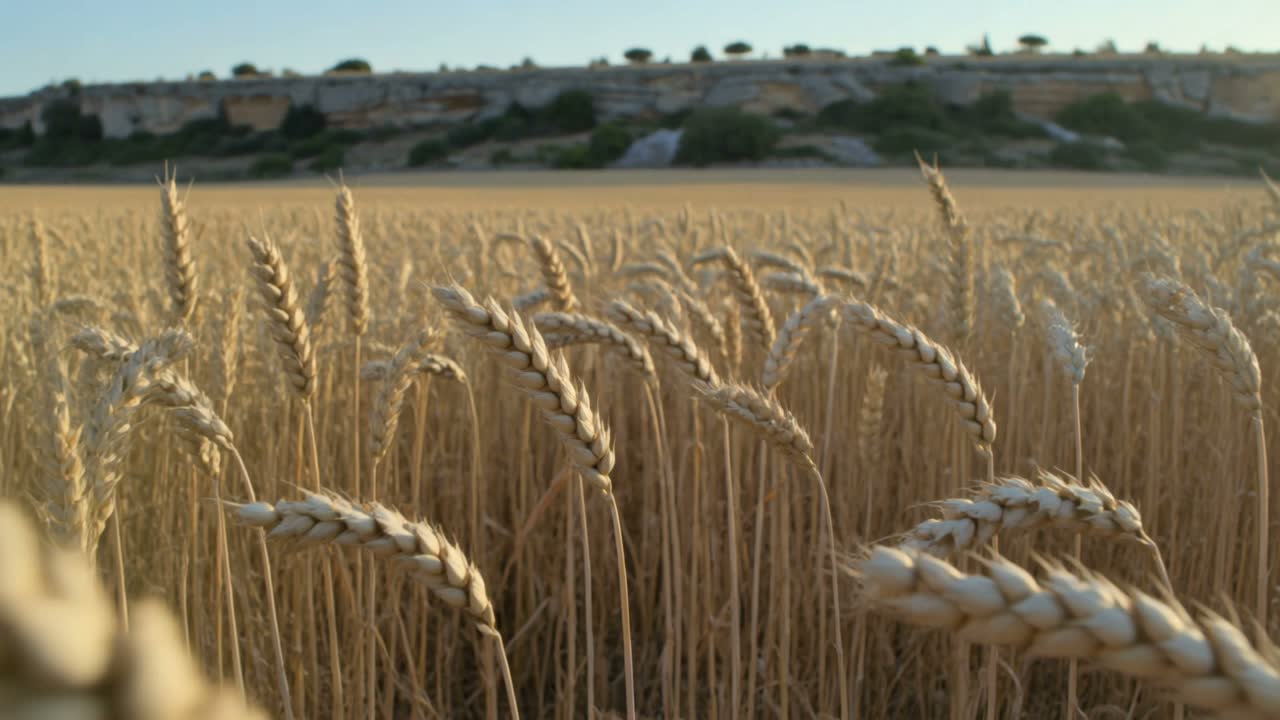
It begins on a limestone plateau in southern Italy, in a territory that for centuries has been tied to cereal farming and pastoralism. In the Alta Murgia, wheat is not merely a food raw material: it has shaped the landscape, economy, trade, work and even parts of the urban structure.
Durum wheat is a cereal typical of Mediterranean environments. In southern Italy its growing cycle usually runs from autumn to early summer: the plant passes through winter, grows again as milder temperatures return, develops the ear and reaches grain maturity as the landscape gradually shifts from green to yellow.
Today a combine harvester performs in one operation much of what once required manual labour, cutting, gathering, drying and threshing. But the logic remains the same: the grain must reach sufficient maturity and dryness, be separated from the plant and then stored in conditions that preserve its characteristics until milling.
And here a word appears that city dwellers can easily overlook: vintage, or rather the character of a specific growing year.
Wheat is not an industrial component that stays identical twelve months a year. Rain, drought, temperatures, disease, soil fertility and agronomic choices all affect yield and grain quality. In 2025, for example, drought in the previous growing season even led to a temporary amendment of the Pane di Altamura specification: for a few months, the requirement concerning the four principal cultivars was suspended, while the obligation for the wheat to come from the defined territory remained in force.
That amendment expired in July 2025 and therefore does not describe the current rule. But it is a small lesson in the meaning of the word tradition.
An agricultural tradition does not live under a glass dome. It lives within climate, seasons, yields, economics and the people who keep practising it.
A city built around wheat too
Long before PDO status, wheat physically moved through Altamura.
Historical research records grain stored in fovee, pits or grain cisterns dug into the ground, including in areas of the city whose names still preserve the memory of that function. From there, the wheat could be sold or taken to the mills.
At the beginning of the seventeenth century, twenty-six milling facilities were active in Altamura. The oldest mills worked with large stones, sometimes powered by animals; during the nineteenth century roller systems and steam power gradually arrived, followed by electricity in the twentieth century.
This transition matters too.
When we call a bread “traditional”, it is easy to imagine an unbroken line in which everything has remained the same. It has not. Mills change. Machines change. Control systems change. Ovens change. Volumes change. Microbiological knowledge and hygiene requirements change. Consumers change.
Tradition is not the immobility of a gesture.
It is more like a language: it remains recognisable precisely because it continues to change without losing every connection to what it once was.
03 The history
Was Horace really talking about Pane di Altamura?
Here it is useful to remove some myth without taking anything away from the history.
In 37 BC, during the journey towards Brindisi described in the Satires, Horace praises the bread encountered along the route so highly that he suggests travellers stock up on it.
This is the origin of one of the phrases most often repeated about Pane di Altamura: Horace called it the best bread in the world.
The interesting part, however, is that the specification itself is far more cautious than much of the later communication. It states that the reference, even if it cannot be attributed specifically to Altamura, can certainly be linked to the Murgian territory.
That is a major distinction.
Horace was not reviewing modern Pane di Altamura PDO two thousand years before its European registration. He was not certifying a recipe, four cultivars, a moisture percentage or a codified shape.
He leaves us something perhaps more interesting: evidence that as early as Roman times this area was associated with bread worth remembering.
That is enough for me.
We do not need to make Horace say more than we can genuinely attribute to him.
When bread began at home and ended in the public oven
For centuries, an essential part of the history of Altamura bread unfolded between two spaces: the home and the oven.
The dough was prepared mainly by women in their homes. The bread was then taken to public ovens for baking. To avoid mixing up the loaves of different families, the baker marked them with the initials of the owner or head of the household using a stamp.
It is a small detail that describes an entire world.
Bread was domestic because it began within the family, but it became public the moment it entered the community oven. Knowledge did not belong to a single profession: it was distributed among those who mixed the dough, those who maintained the starter, those who carried the loaves and those who knew the oven well enough to bake breads that were not necessarily identical together.
The municipal statutes of 1527 document the oven duty. A document from 1420 refers to an exemption from the bread duty for the clergy. Domestic baking was subject to prohibitions and penalties, partly because the system of public ovens carried economic and fiscal importance for the city.
The ovens, in other words, were not simply places where something was put in the heat.
They were economic and social infrastructure.
Until the middle of the twentieth century, according to the memory preserved in the specification documentation, people in the streets could still hear the baker's cry at dawn announcing that the bread had been baked.
Then the system changed.
During the twentieth century professional production grew, bakeries developed in the modern sense of the word and, gradually, part of the work once divided between home and oven became concentrated in the baker's workshop.
The bread remains “the same” only if by same we mean a genealogy.
Not a frozen photograph.
Why were the loaves so large?
Size has a reason too.
In an agro-pastoral society, bread had to accompany people who spent days away from home, in the fields and on farms. Historical documentation repeatedly emphasises one quality: keeping ability.
This is an important term because today it is easy to misunderstand it.
Keeping ability does not mean that bread fresh from the oven stays soft, elastic and aromatically identical for seven, ten or fifteen days.
It means that the bread could continue to be used as food while it changed.
When it lost its first-day texture, it did not automatically become waste. It entered different preparations: it was moistened, dressed, immersed in hot liquids, turned into soups and dishes that gave it a new function.
Cooking with stale bread is not the plan B of a poor culture that had no fresh bread.
It is part of the domestic food technology of that world.
2003: when a tradition became PDO
The decisive step for contemporary Pane di Altamura came in 2003, when the name was registered as a Protected Designation of Origin.
It was the first European bread to receive this recognition.
PDO status does something necessarily modern: it takes a complex, living tradition and turns it into a set of verifiable conditions.
It has to define an area.
It has to state which raw materials are permitted.
It has to define a process.
It has to indicate the characteristics of the finished product.
This does not mean that the specification contains the entire culture of Altamura bread. That would be impossible. It means that it draws the boundary within which a bread may legally use the protected name.
It is a regulatory snapshot of a tradition, not the whole tradition.
And precisely for this reason Pane di Altamura PDO and breadmaking in Altamura do not perfectly overlap.
The latter is larger than the former.
04 The cultivars
The five municipalities where the raw material begins
One of the easiest mistakes to make is to think that Pane di Altamura PDO must necessarily be made with wheat grown only within the municipality of Altamura.
The raw-material territory is broader.
It includes Altamura, Gravina in Puglia, Poggiorsini, Spinazzola and Minervino Murge.
It is therefore more accurate to think of the PDO as a supply chain linked to an area of the Alta Murgia that is larger than the municipality of Altamura alone.
The wheat grown in this area is milled into remilled semolina, which is then used for the dough.
The four main cultivars: Appulo, Arcangelo, Duilio and Simeto
The specification requires at least 80% of the semolina to come, individually or in combination, from the durum wheat cultivars Appulo, Arcangelo, Duilio and Simeto grown in the defined territory. The remaining portion may come from other durum wheat varieties, provided they are also grown within the same territory.
This means, first of all, that the phrase “Pane di Altamura is made with four wheats” is a simplification: those four cultivars must account for at least 80%, not necessarily 100%.
But there is another interesting point. Cultivars are not absolutely interchangeable: they can have different technological characteristics and behave differently during breadmaking and staling. One comparative study produced separate breads while keeping the process constant and using, each time, single-variety semolina from Appulo, Arcangelo, Duilio and Simeto. The values below belong to that specific study: they are not immutable labels for the cultivars, because growing year, soil, milling and other variables can alter the raw material.
| Cultivar | Protein (% dry matter) | Strength W | Yellow index | Behaviour observed in the study |
|---|---|---|---|---|
| Appulo | 12.6 | 84 | 17.8 | It had the lowest yellow index in the group; the bread showed a faster increase in crumb firmness than Simeto. |
| Arcangelo | 9.9 | 71 | 19.0 | In the study it had the lowest protein and strength values; the crumb was relatively soft at 24 hours, then progressively became firmer. |
| Duilio | 12.6 | 144 | 18.6 | Stronger semolina than Appulo and Arcangelo; good initial crumb softness, but still faster staling than Simeto. |
| Simeto | 13.3 | 220 | 20.1 | It had the highest protein, strength and yellow-index values and, under the test conditions, lost less water and staled more slowly over the eight days observed. |
Overall sensory differences were less marked than the technological ones. The most significant changes involved crumb colour and grain, perceived moisture and crust crispness. It is a useful reminder: the cultivar name alone does not tell the story of the bread, but the raw material can genuinely affect the result.
05 From grain to semolina
From grain to remilled semolina
If you come from the world of pasta, the word semolina is familiar.
Semolina is produced by milling durum wheat and is naturally coarser than conventional soft-wheat flour. With further processing, the particle size is reduced and we obtain remilled durum wheat semolina, finer and better suited to breadmaking.
Put that way, it sounds like a trivial difference.
It is not.
The way a milled product absorbs water, develops dough, responds to fermentation and builds its final structure also depends on its physical and technological characteristics. Studies on remilled semolina used in traditional southern Italian breads show significant differences in breadmaking performance.
So even “remilled durum wheat semolina” does not describe a perfectly standard ingredient.
It describes a category.
Within that category are grain quality, protein, gluten behaviour, particle size, enzymatic activity, pigments and other characteristics that the miller must understand and manage.
And this is where another often-forgotten figure enters the bread: the mill.
If we tell only the baker's story, we skip an entire stage.
Where the yellow colour of the crumb comes from
One of the most recognisable features of Pane di Altamura is its straw-yellow crumb.
The specification explicitly requires it.
That colour is linked to the use of durum wheat and its natural pigments. The exact shade can of course vary: raw material, varietal blend, process and baking do not produce industrial copies of the same colour.
It is also one of the most immediate visual clues distinguishing these breads from many breads made predominantly with soft-wheat flours.
But here too I would avoid the shortcut: yellower does not automatically mean better.
Colour is a characteristic.
Judgement comes later.
06 Sourdough and dough
Sourdough: important, not miraculous
In Pane di Altamura PDO, sourdough starter — lievito madre or pasta acida — is an integral part of the method.
The specification requires the fermented mass to undergo at least three refreshments before the final dough is mixed. In the reference formulation, 100 kilograms of remilled semolina are combined with 20 kilograms of sourdough starter, around 60 litres of water and 2 kilograms of sea salt.
Sourdough is not simply “an older kind of yeast”.
It is a microbial ecosystem in which yeasts and lactic acid bacteria take part in fermentation. Its management affects acidity, aroma development, dough behaviour and keeping qualities.
But there is a very large step between that and automatically declaring it “more digestible yeast”.
The digestibility of a food is not a switch controlled by a single ingredient. Flour, process, quantity, fermentation, baking, recipe and the person eating all contribute to the outcome.
Sourdough already has plenty of interesting things to tell us without assigning it powers we do not need to invent.
How Pane di Altamura PDO is made
The codified method is surprisingly precise.
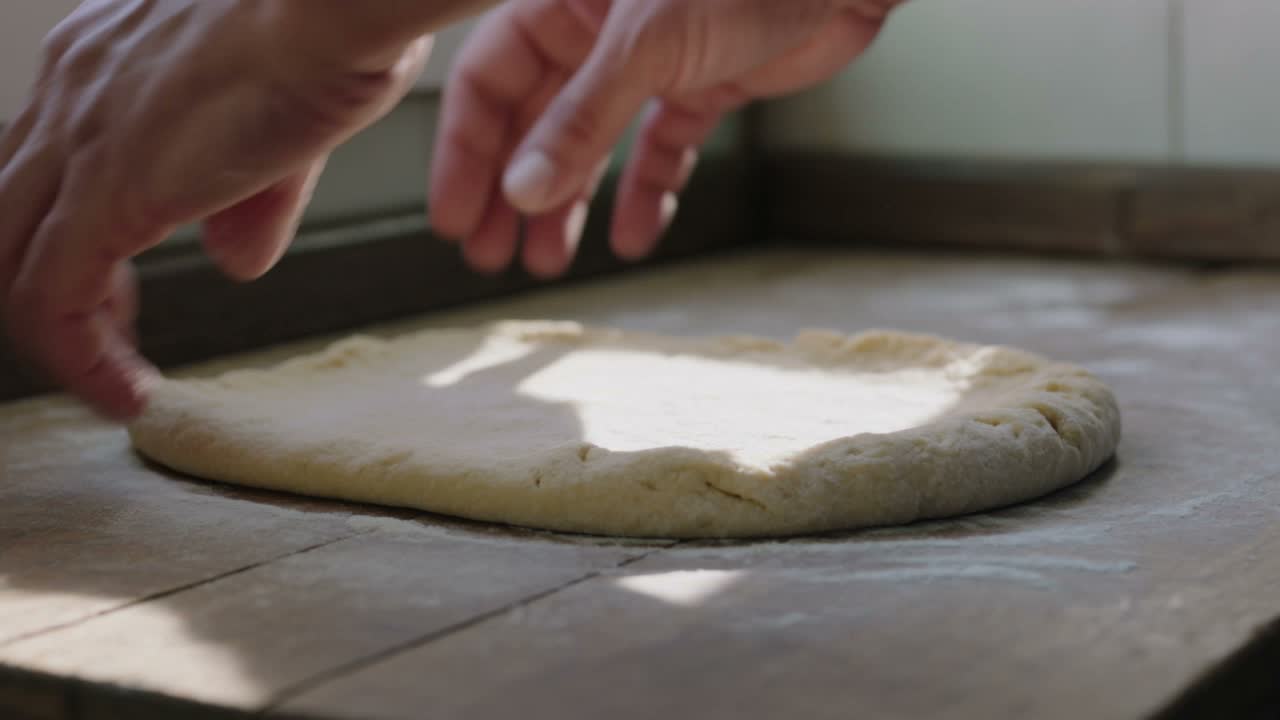
After preparing the sourdough starter, the dough is mixed. The specification indicates around twenty minutes of mixing in a diving-arm mixer.
Then comes time.
The dough mass is covered with a cotton cloth and left to rest for at least ninety minutes. It is then weighed and given a first manual shaping, followed by a thirty-minute rest. A second hand-shaping follows, then another rest of at least fifteen minutes.
It is worth stopping here.
When we read “48-hour fermentation” or “72 hours” on social media as though the number alone were a certificate of quality, Pane di Altamura reminds us that a method is not a stopwatch.
It is a sequence.
Temperature, quantity of sourdough, characteristics of the semolina, dough development, resting periods and handling all interact. Time matters, but it matters within a process.
07 The shapes
The two traditional shapes
Pane di Altamura PDO may be sold in two traditional shapes.
The first is the tall, folded-over form called sckuanète, with its characteristic contact marks along the sides.
The second is lower and is known as a cappidd d'prèvte, the “priest's hat”, without those contact marks.
These shapes do more than make the bread recognisable.
Geometry changes the relationship between surface and volume, between crust and crumb, and therefore the eating experience too. A taller shape distributes these parts differently from a lower one.
That is one reason why, when comparing two breads, we should at least ask whether we are really comparing products built in the same way.
08 The oven
The oven: wood, yes, but not only wood
Another easy myth is: Pane di Altamura necessarily means a wood-fired oven.
The specification is more nuanced.
The oven must reach around 250 °C and may be fuelled, preferably, by wood or gas, using the heating systems allowed by the method. In direct-fired ovens, the wood must be oak.
Baking also follows a precise sequence.
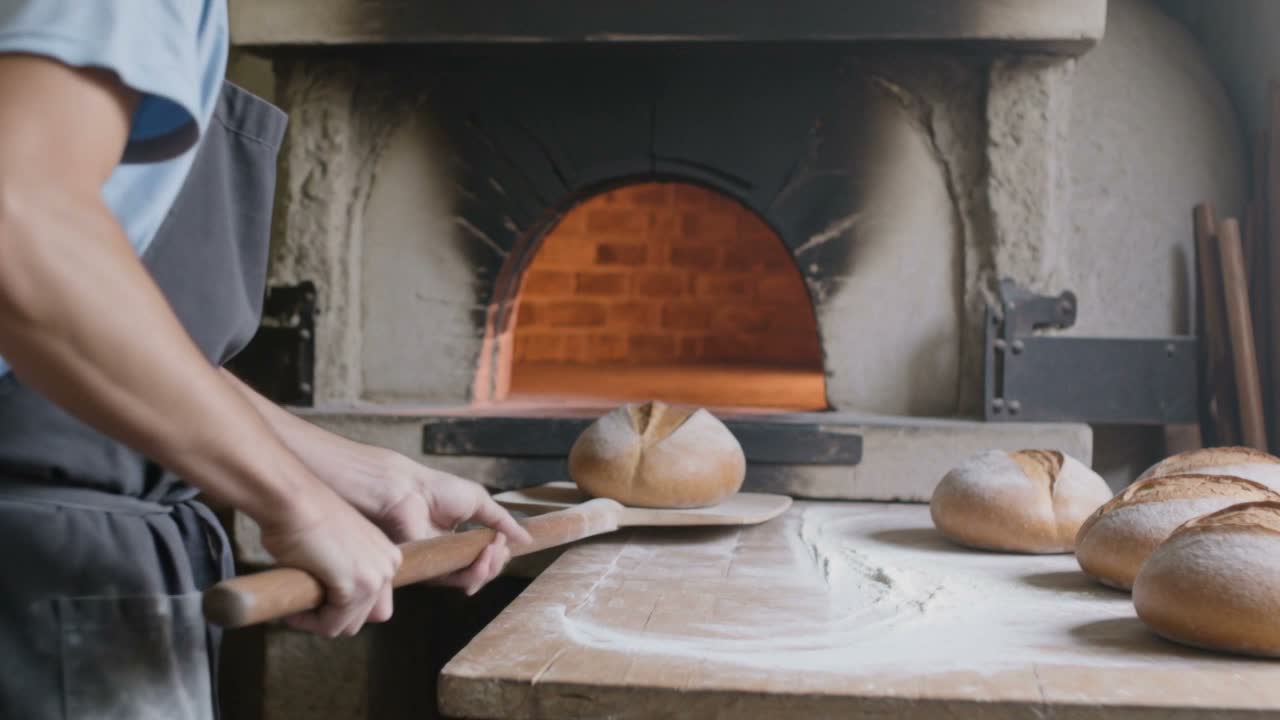
The first stage takes place with the oven open for around fifteen minutes. The mouth is then closed and baking continues for another forty-five minutes. At the end it is reopened for at least five minutes to allow steam to escape and the crust to dry.
This tells us a great deal about the finished product.
The crust of Pane di Altamura is not packaging.
It is a structure created by heat, evaporation, transformations of starches and proteins, development of colour and aromatic compounds.
The specification requires it to be at least 3 millimetres thick.
That is not little.
And it is one reason why a slice of this bread behaves differently from one designed to be soft and thin-crusted.
What really happens inside the oven
At the beginning, the dough enters a very hot environment while still containing a great deal of water.
The gases already present expand, fermentation continues for an initial period, starches absorb water and gelatinise, and proteins help set the structure. At the surface, where water evaporates more quickly and the temperature can rise further, the crust gradually forms.
As baking progresses, colour and toasted notes develop.
This is where bread and dough definitively become two different things.
Crust and crumb experience different thermal conditions and develop different aromatic profiles. Analyses of the volatile compounds in Pane di Altamura show considerable complexity and differences between the various parts of the bread.
That is why smelling only the crumb or only the crust means listening to only half the story.
09 Crust, crumb, aromas
What a Pane di Altamura PDO should look like
Here it is useful to separate what is mandatory from what is sensory interpretation.
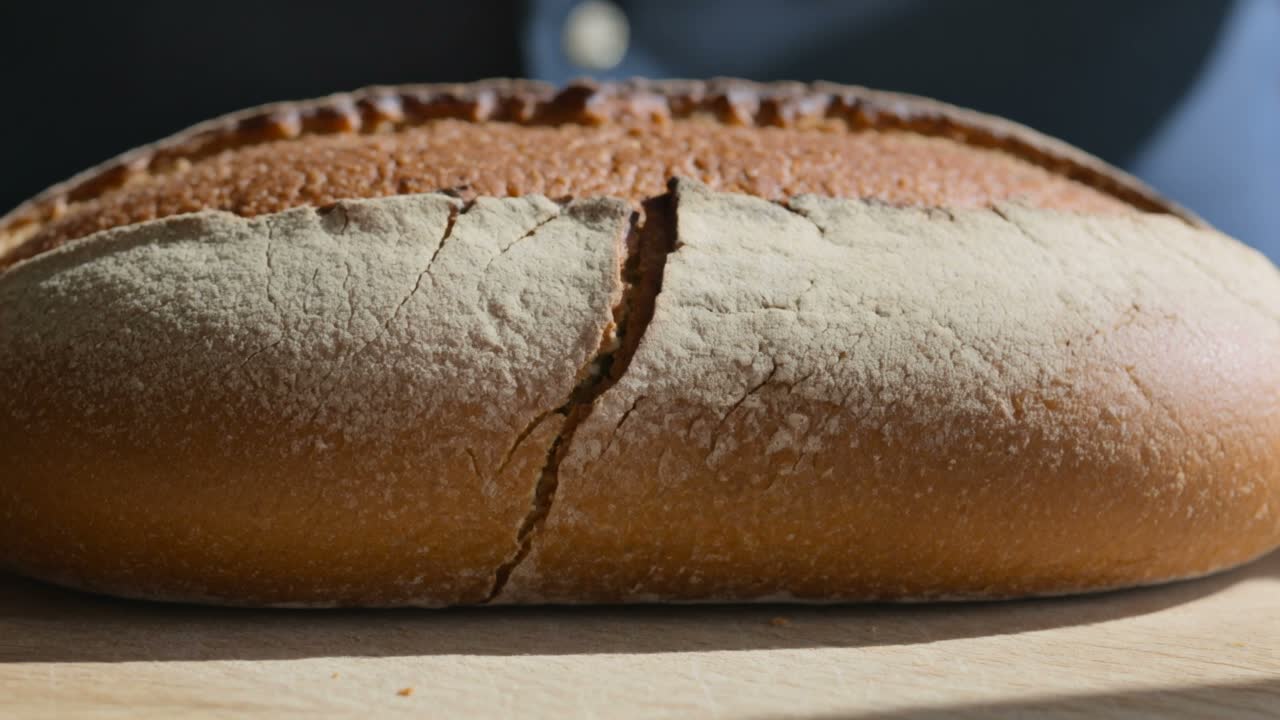
The specification requires at least:
- a weight of no less than 500 grams;
- one of the two permitted shapes;
- a crust at least 3 millimetres thick;
- a straw-yellow crumb;
- even alveolation;
- a characteristic aroma;
- moisture not exceeding 33%.
You will notice that it does not say: “it must taste of hazelnut”, “it must have exactly this acidity” or “the crumb must be soft as a cloud”.
And rightly so.
On a sensory level we can describe what we encounter: intensity of toasting, cereal aroma, more or less evident acidity, crumb elasticity, crust crispness, moisture, size of the holes.
But I would not turn a personal tasting sheet into an imaginary extension of the specification.
What does Pane di Altamura taste like?
The most accurate answer is: it also depends on which one you are eating.
The specification creates a boundary; it does not clone loaves.
Producer, sourdough management, semolina blend, fermentation conditions, oven, shape, size, degree of baking and the moment you taste the bread all vary.
In a good example, however, I expect a clear cereal presence, a crust with more pronounced toasted notes than the crumb, a recognisable but balanced fermented component and a crumb that is not simply a neutral support.
Durum wheat also leaves a clear visual identity.
But the best way to understand it is to do something very unsophisticated: buy different loaves and eat them at the same time, without any topping.
Smell first.
Then break.
Then taste crust and crumb separately.
Finally, together.
You quickly discover that “Pane di Altamura” does not mean “one single flavour”.
Alveolation: bigger does not mean better
In recent years Instagram has trained us to judge certain doughs from a photograph of the cut surface.
The bigger the holes, the more technically evolved the bread appears.
But alveolation is not a ranking.
The Pane di Altamura specification calls for even alveolation, not enormous cavities. The structure must make sense for the product, the flour, the shape and the intended use.
A very open crumb can be wonderful in a bread designed to have one.
It can be inconvenient if you want to pick up olive oil, tomato or the juices from a dish and half the dressing falls straight through the slice.
Once again: better for doing what?
10 Time
Bread changes. Fortunately.
This is perhaps the part that interests me most.
Pane di Altamura does not stop changing when it leaves the oven.
In the following hours, the crust absorbs some moisture from the inside and gradually loses part of its initial crispness. The crumb changes structure. Over the following days complex phenomena take place, including starch reorganisation and redistribution of water.
In one specific study of Pane di Altamura PDO followed over six days, desirable characteristics such as crumb elasticity and cohesiveness and overall aroma decreased over time, while crumb firmness and stale aroma increased.
So yes:
Pane di Altamura goes stale.
Like bread.
Its distinctive quality is not immunity to time.
It is the way structure, size, raw material and process allow it to remain usable and gastronomically interesting even when it is no longer first-day bread.
Media in preparation 
Media in preparation 
Media in preparation 
Media in preparation
Observational test in preparation: the same loaf at 0, 24, 48 and 72 hours.
How long does Pane di Altamura really last?
It depends on what we mean by last.
If we mean “remain identical to the moment it came out of the oven”, the answer is simple: it does not.
If we mean “remain usable for several days and lend itself to different uses as it changes”, then we touch one of the deepest characteristics of its history.
The old agro-pastoral society did not need bread that pretended to be freshly baked for two weeks.
It needed bread that, after several days, was still food.
Those are two very different ideas of preservation.
Stale and mouldy are not synonyms
This is another frequent misunderstanding.
Staling is a set of physical and sensory transformations: the crumb becomes firmer, water distribution changes and aromas evolve.
Mould is microbial growth.
Bread can be very stale without being mouldy. And food kept in conditions favourable to microbial growth can develop mould before its degree of hardness would lead you to expect.
So comparing two breads simply by saying “this one goes hard and that one gets mouldy” mixes two different phenomena.
How to store Pane di Altamura
For a few days, the goal is balance: limit excessive drying without creating an environment that is too humid.
A bread bag or breathable wrapping, kept in a dry, clean environment, is consistent with normal household consumption. Once cut, bread exposes much more crumb to the air and changes faster than a whole loaf, so it is best not to slice the entire loaf in advance unless necessary.
For normal household use, bread should not be kept in the refrigerator: refrigeration temperatures accelerate staling and make the crumb lose its pleasant qualities more quickly.
If you already know that you will not eat part of the loaf over the following days, freezing it in portions is a much more sensible choice. It preserves the bread better and lets you thaw only what you need.
Then there are personal preferences.
Some people want to preserve the crust as much as possible. Others prefer a better-protected crumb. No household storage method can maintain every characteristic of freshly baked bread at the same time.
That too is physics, not a betrayal of tradition.
11 At the table
How to eat it when you have just bought it
I would start in the simplest possible way.
One slice.
Nothing on top.
First you need to understand what you bought.
Then extra virgin olive oil. Tomato. A cheese. Cured meat. Vegetable dishes. Meat with cooking juices. Pulses. Anything that benefits from a slice with a substantial crust and a crumb capable of absorbing.
The contemporary temptation is always to add.
Sometimes the best way to understand a product is to remove.
And when it goes stale?
Here Pane di Altamura stops being only bread and almost becomes an ingredient.
Local cooking has built around the bread of the following days a repertoire worth knowing at least as well as the fresh loaf.
There is cold cialledda, where stale bread is lightly moistened and combined with tomato, onion, carosello cucumber, oregano, olive oil and ingredients that vary from family to family.
There is hot cialledda.
There is pancotto, pen cuett.
There are bruschette, toasted bread, crostini and breadcrumbs.
And there are all those domestic uses that probably never needed a name because they were simply what people did with bread when bread was not thrown away.
This part of gastronomic history interests me enormously because it completely overturns our modern relationship with freshness.
Today we often treat the next day as a loss of quality.
Peasant cooking learned to treat it as a change of function.
12 Where to buy it
How to recognise the PDO product when you buy it
For a tourist, this is probably one of the most useful pieces of information in the whole article.
Do not rely only on the sign outside, the shape of the loaf or the fact that the bakery is in Altamura.
Pane di Altamura PDO must be identified through the elements required for the certified product. It may be packaged with the relevant labelling or sold unwrapped with the appropriate sticker bearing the designation.
There is also a list of supply-chain operators, available on the website of the Consortium for the Protection and Promotion of Pane di Altamura PDO.
It is the simplest reference for checking whether a baker is among those producing Pane di Altamura PDO.
The right question to ask at the counter is extremely simple:
“Is this Pane di Altamura PDO?”
If the answer is no, it does not mean you should leave.
It simply means you are about to buy another bread.
And it may be the one you like best.
Where to buy bread in Altamura
This will be the section that changes most often.
Altamura has many bakeries and I have tried several of them myself, but not all. What follows is not a ranking and does not claim to be a census of Altamura breadmaking: it is simply my personal list, based on what I have eaten and what I would recommend.
If a bakery is not included, there are two possibilities: I have not tried it yet, or I have tried it and, as a matter of personal taste, I would not include it among the places I recommend. This is not an absolute judgement on anyone's work; it is the inevitably subjective criterion of a guide signed by me.
The distinction made at the beginning remains fundamental: when a product is Pane di Altamura PDO, I say so explicitly. In every other case I am talking about bread made in Altamura, which may follow different recipes, flours and methods.
| Bakery | Product | Description | Why I recommend it | Google Maps |
|---|---|---|---|---|
| Forte | PDO bread | An unmistakable flavour: savoury, fragrant, recognisable. | It has a very clear character and, for me, is one of the PDO breads worth tasting. | Open in Google Maps the location of Forte (new tab) |
| Rusticone | A very distinctive, rustic flavour: you can really taste the wheat. | Perfect with cured meats, cheeses and raw meat. | ||
| Regular bread | Delicious, full of crumb and very moist. | Perfect for soaking up sauces. For bruschetta I prefer to let it stale slightly, because when freshly bought it is too moist. | ||
| Wholemeal with flax seeds | An extraordinary aroma and flavour. | Here I am deliberately not neutral: for me it is genuinely addictive. | ||
| Scalera | Regular bread | Extraordinary notes of oven, wood and smoke. | Every bite, for me, is a journey. It is one of those breads you remember for its aromatic profile. | Open in Google Maps the location of Scalera (new tab) |
| L'Oro degli Dei - Via Carpentino | Regular bread | An extraordinary, fragrant bread. | Perfect for bruschetta and boards of cured meats and cheeses, but above all as sandwich bread. | Open in Google Maps the location of L'Oro degli Dei - Via Carpentino (new tab) |
| Ciabatta | A traditional bread roll with a unique flavour. | It is one of my favourite rolls. | ||
| Voglia di Pane | Ciabatta | For me, it is the most beautiful-shaped bread roll in the world. | The shape itself makes you want to eat it before you even taste it. | Open in Google Maps the location of Voglia di Pane (new tab) |
| Panificio S. Chiara | Regular bread | An extraordinary bread. | I include it without needing many words: for me it deserves a place on this list. | Open in Google Maps the location of Panificio S. Chiara (new tab) |
The list will grow over time, but only when I have something concrete to add.
PDO or non-PDO: what should I choose?
Whatever you are looking for.
If you want to understand the protected product, buy Pane di Altamura PDO and check that it really is PDO.
If you want to understand contemporary bread culture in Altamura, it would be absurd to stop there.
Do both.
Buy a PDO loaf.
Then walk into a bakery working outside the specification and ask what bread they are making, what flour they use and why.
At that point the city stops being the home of one famous bread and becomes something more interesting:
a place that keeps making bread.
13 Not a recipe
Tradition does not mean everything used to be better
There is one sentence that inevitably appears whenever people talk about historic products:
it isn't what it used to be.
It may be true.
It may be false.
Most importantly, said like that it means almost nothing.
Which used to be?
1980? 1950? 1900? The bread made by families? The bread of the first modern bakeries? Baked in which oven? With which wheat? Milled using which system? Stored how?
Today's Pane di Altamura cannot be materially identical to that of a hundred years ago because the world around it is not identical.
And that is not necessarily bad news.
We have better hygiene controls, more precise tools, greater knowledge and the ability to measure moisture, temperatures and processes. We also have different economic pressures, larger volumes, longer distribution chains and consumers with expectations our great-grandparents would not have recognised.
The serious question is not whether the bread has changed.
It is what has changed, why, and with what effect.
That is one of the questions I will continue to pursue in future updates to this article.
Pane di Altamura is not a recipe
At the end of this journey, at least one thing becomes clear.
We can write the ingredients in four lines.
Remilled durum wheat semolina.
Sourdough.
Water.
Salt.
But Pane di Altamura is not the sum of those four words.
If it were, reproducing the recipe anywhere in the world would be enough.
The PDO tells us that the origin of the raw material matters.
History tells us that a territory and an economy that built this way of using bread matter.
Technique tells us that varieties, milling, fermentation, handling and baking matter.
Cooking tells us that what happens after the oven matters too.
And taste reminds us that, in the end, two people can eat the same slice and think differently about it.
Perhaps this is the fairest way to tell the story of a traditional product.
Do not turn it into a monument.
Understand why it exists.
14 Frequently asked questions
Frequently asked questions about Pane di Altamura
What is the difference between Pane di Altamura PDO and bread made in Altamura?
Pane di Altamura PDO is a protected designation and may be used only for the product made within the prescribed supply chain and according to the specification. Bread made in Altamura may use different recipes, flours and methods and may be excellent, but that does not make it Pane di Altamura PDO.
Is Pane di Altamura PDO made only with wheat grown in Altamura?
No. The defined territory includes Altamura, Gravina in Puglia, Poggiorsini, Spinazzola and Minervino Murge.
Which wheat varieties are used for Pane di Altamura PDO?
At least 80% of the semolina must come, individually or in combination, from the Appulo, Arcangelo, Duilio and Simeto cultivars grown in the defined territory. The remainder may come from other durum wheat varieties, provided they are also grown in the same area.
Does Pane di Altamura use sourdough?
Yes. The PDO method requires sourdough starter or natural leaven and at least three refreshments of the fermented mass before the dough is mixed.
Does Pane di Altamura have to be baked in a wood-fired oven?
No. The specification allows different oven configurations. In direct-fired ovens used for the PDO product, oak wood must be used.
What are the traditional shapes?
The tall, folded-over shape is called sckuanète and is characterised by contact marks along the sides. The lower shape is called a cappidd d'prèvte, “priest's hat”, and has no such marks.
How much does a Pane di Altamura PDO loaf weigh?
The specification requires a weight of no less than 500 grams.
Why is the crumb yellow?
The straw-yellow colour is mainly linked to the use of remilled durum wheat semolina and the pigments naturally present in the raw material. It is also a characteristic required by the specification.
Does Pane di Altamura stay soft for a week?
Not in the sense of remaining identical to the first day. Bread stales and its sensory characteristics progressively change. Historically, its keeping ability referred above all to its capacity to remain usable as food for several days, including through different preparations.
How should it be stored?
For consumption over a few days, it should be protected from excessive drying without trapping too much moisture. It is better not to slice the whole loaf in advance and not to refrigerate it, because low temperatures accelerate staling. For longer periods, freezing the bread in portions is preferable.
How can I recognise the PDO product?
Buying it in Altamura is not enough. Look for the correct product identification, the PDO sticker or labelling and, if in doubt, check that the producer belongs to the authorised supply chain.
What is the best bakery in Altamura?
I am not going to name one. “Best” always requires a criterion: PDO or non-PDO, crust, crumb, acidity, shape, freshness, gastronomic use, personal preference. Over time, this article will build a reasoned guide to Altamura bakeries without turning it into a ranking.
Article updates
22 October 2026 — First publication.
First public version of this long-form guide to Pane di Altamura, covering its history, PDO status, territory, raw materials, cultivars, semolina, sourdough, production, baking, sensory profile, staling, storage, gastronomic uses and a first personal guide to bakeries.
In future updates I will add field visits, real photographs of the supply chain, an observational test of the same loaf at 0, 24, 48 and 72 hours, new bakery notes and testimonies from farmers, millers and bakers.